
The SWOT analysis is an essential tool for assessing businesses, but it can be tricky for some students to master. By breaking the process down, students can find success. Here are some practical steps to simplify the SWOT analysis for your class.
1. Start by Explaining the Components
Define each component of the SWOT analysis and explain the difference between internal and external factors. Help students apply these concepts by providing easy-to-understand examples they can label.
For instance, the online store has a reputation for excellent customer service. Students would then label this example as a strength.
2. Provide Prompts
The SWOT matrix can feel daunting when viewed all at once. Simplify it with step-by-step guidance.
I like to provide students with a scenario and guided questions or prompts to help them complete the SWOT analysis. Guided questions ensure students stay on task while developing a further understanding of each component. These questions are dependent upon the scenario, but some examples include:
- What does this company do well?
- What internal challenges does the company face?
- How could the business expand?
- How does the competition impact the business’s ability to succeed?
These questions encourage critical thinking while focusing analysis on one component at a time.
3. Visualize with SWOT Quadrants
Many students are visual learners. Show them how to map their ideas into a quadrant format. Provide a pre-filled example to help them see how everything fits together.
4. Use Real-World Scenarios
When using scenarios, make sure these examples are engaging and realistic. Practical examples like evaluating a new sushi restaurant in Los Angeles or an up-and-coming tech company can make learning meaningful and impactful. Realistic situations create great topics for discussion and debate.
Encourage Exploration with Real Brands
Dive in further with an exploration of real brands. The process becomes more meaningful and engaging when students connect their learning to companies they admire.
Here’s how you can promote exploration:
- Use with Well-Known Brands: Assign popular companies like Apple®, Starbucks®, or Adidas®. Students are often familiar with these companies’ products and services, making identifying strengths, weaknesses, opportunities, and threats easier.
- Encourage Personal Interests: Let students pick brands they’re passionate about, like a favorite sports team. Personal connections spark enthusiasm and creativity.
- Incorporate Guided Research Projects: Remember the power of guided questions and prompts. Students may find it challenging to “create a SWOT analysis,” but detailed instructions give them a clear understanding of what you expect.
Brand exploration is a great way to develop research skills. Take it a step further by having students share their findings. This creates a collaborative learning environment and provides practical experience presenting.
6. Encourage Collaboration
Use partners or small groups throughout your lesson. Collaborative discussions help students learn from each other and gather key insights.
7. Reflection
Never underestimate the power of reflection. I think of this as the cumulative section that brings the lesson together. With a reflection, you can ensure that students have mastered your initial objectives. For a SWOT, ask students to reflect with prompts like:
- Explain each component of the SWOT in your own words.
- What are the potential consequences of ignoring one aspect of a SWOT analysis?
- What strategy would you recommend based on this analysis?
Take It Further with a Comprehensive Resource
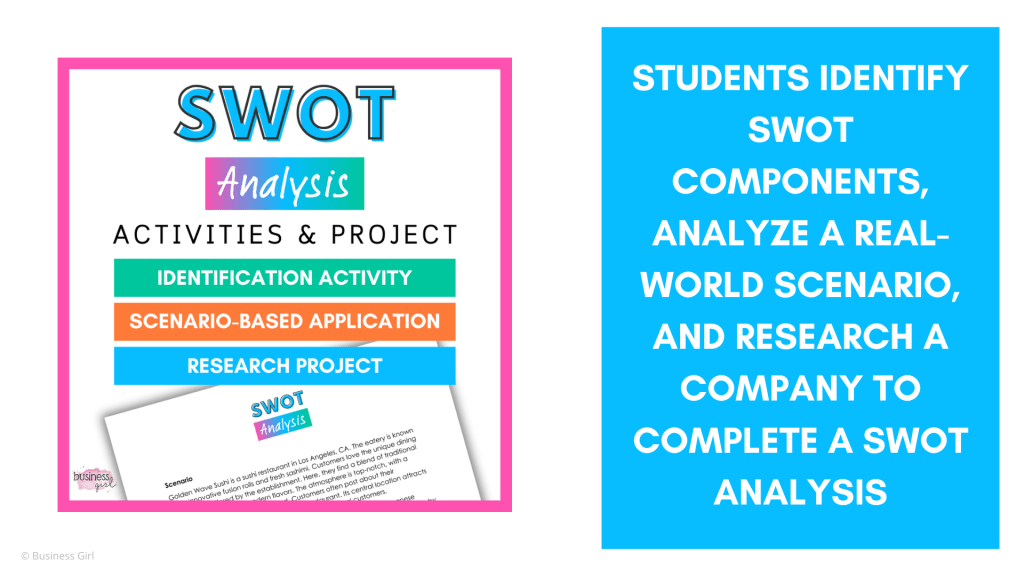
Ready to simplify SWOT analysis in your classroom? The SWOT Analysis Activities and Project is perfect for helping students build critical thinking and apply their learning to real-world scenarios.
💡 What’s Included?
- Engaging Identification Activity: Teach the basics of SWOT with 20 examples and an answer key.
- Real-World Scenario: Analyze a sushi restaurant in LA scenario with guided questions.
- Research-Based Project: Students research companies, complete a SWOT analysis, and present their findings to identify market leaders.
🖤 Why Teachers Love This Resource:
- No Prep Required: Just download and go!
- Editable: Fully customizable for your needs.
- Real-World Focus: Designed to build business insights and critical thinking skills.
👉 Grab this resource today and make the SWOT analysis an engaging and accessible topic for your students!
Conclusion
Simplifying SWOT analysis doesn’t have to be complicated. By starting small, using guided questions, and incorporating visual tools, you can help your students master this critical business skill.
 Business Girl Education