
In my first semester of teaching, I allowed my students to pick their own business concepts for the business plan. It was a TOTAL disaster—make your own girlfriend vending machines and child cars, you get the idea. I quickly realized that my students needed more guidance to make the business plan successful.
Learning to teach the business plan was a process for me. After trial and error, I was so proud of my students and the depth of content they produced. The business plan can really get your students thinking and exploring content in a new way.
Here’s what I learned about teaching the business plan:
1. Set Parameters
Parameters are essential to a successful business plan. In my Introduction to Business and Marketing course, I started the food truck project. It’s important for students to be able to be creative with the content, but giving them some basics to start can go a long way. For example, give them an industry or tell them to select a product they love and provide improvements.
Other Ideas:
- Provide Specific Industries: Choose industries that are relatable and engaging for students, such as technology, fashion, food and beverage, or entertainment. This helps narrow down their choices and keeps their ideas realistic.
- Offer Sample Business Ideas: Provide students with a list of sample business ideas within the chosen industry. Examples can include a tech gadget repair service, a custom t-shirt printing business, or a mobile café.
- Set Clear Criteria: Define what makes a business idea feasible. Criteria might include target market identification, potential profitability, and the uniqueness of the product or service.
2. Select the Right Length
There are tons of formats and length options out there, so select what you think is most valuable to your students and roll with it. For my high school students, I expect a traditional business plan to span several pages, a lean business plan to take about one to three pages, and the lean canvas model to be one page.
The length you select may depend on your students, the time depth you want them to achieve, and the time constraints you have for the project. I like to use different lengths in different classes to show students a diversity of options. ⠀⠀⠀⠀⠀⠀
3. Chunking
I’m a total fan of chunking the business plan. Giving students all the areas of a traditional business plan upfront can be overwhelming. Try breaking it down into a few sections each day, discussing and providing work time as you go.
In the Food Truck Step-by-Step Business Plan, I provide a pacing guide for which areas to cover each day. The first draft of the traditional business plan typically takes about five days.
4. Provide Feedback
Next, give students feedback as they work. I like to read their business plans as they work so I can give frequent academic feedback for them to revise as they go. Whether this means walking around the classroom or having them share with you in Google Docs™, students need the feedback to produce a high-quality product.
Another option is to incorporate peer review sessions where students can give and receive feedback from classmates. This fosters collaboration and provides diverse perspectives.
5. Use a Grading Rubric
The grading rubric—students often underutilize this tool. Provide a physical (or digital) copy, have them refer to it while they are working, and have them use it as a checklist before submitting.
Go over the rubric with the class, explaining each criterion and what is expected for different grade levels. Clear expectations can go a long way toward students producing a high-quality product.
6. Don’t Re-create the Wheel
My final tip is to use the available resources. To kick off your lesson, start with my FREE internet scavenger hunt. This activity helps students explore the importance of business plans, understand their main components, research effective tips for writing them, and learn the differences between traditional and lean startup business plans.
Next, use my FREE graphic organizer for a business plan with direct instruction to dive into the parts of the business.
Last, but not least, direct students to free online resources like the SBA website, Bplans, and Entrepreneur.com for templates and examples. While I never want students to copy what’s already out there, students often find it helpful to see an example before starting on their own business plan.
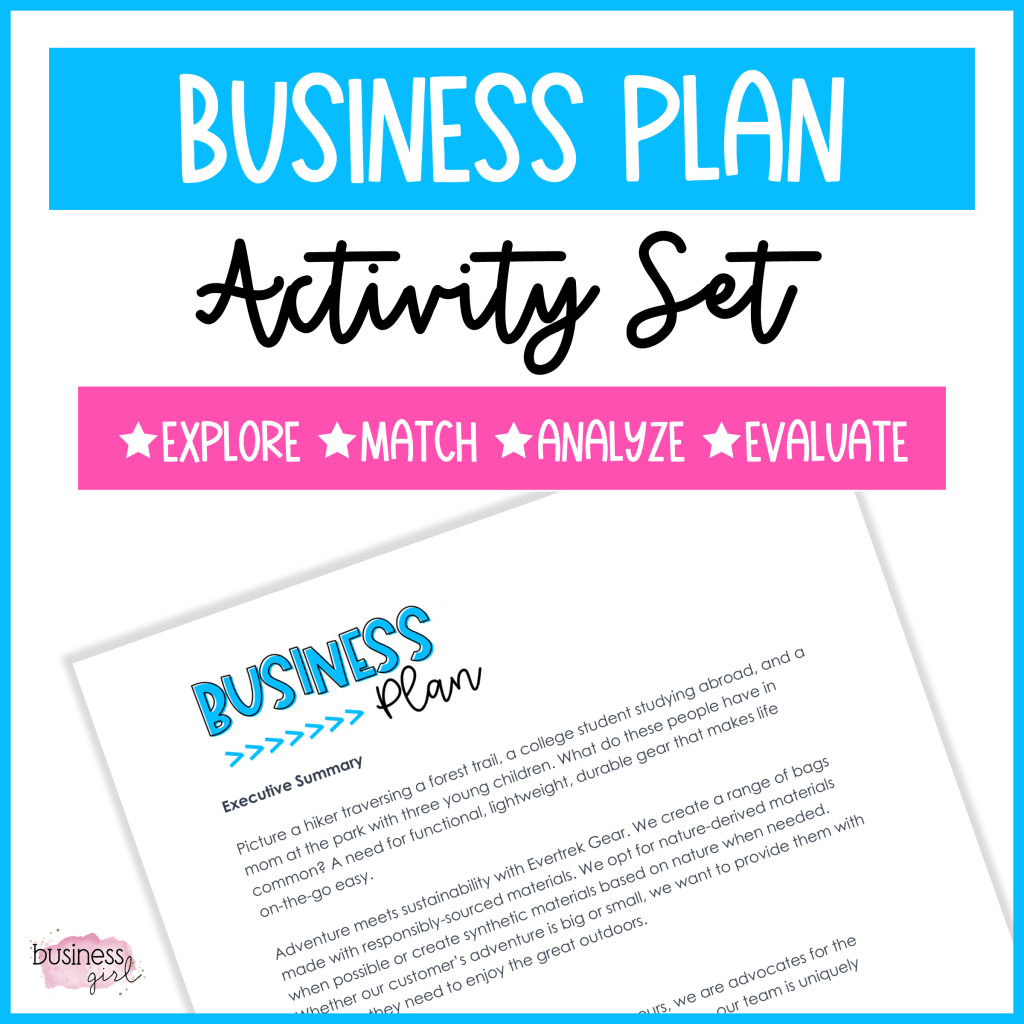
Looking for some ready-to-use business plan projects?
You can find these in my TPT store⬇️


 Business Girl Education